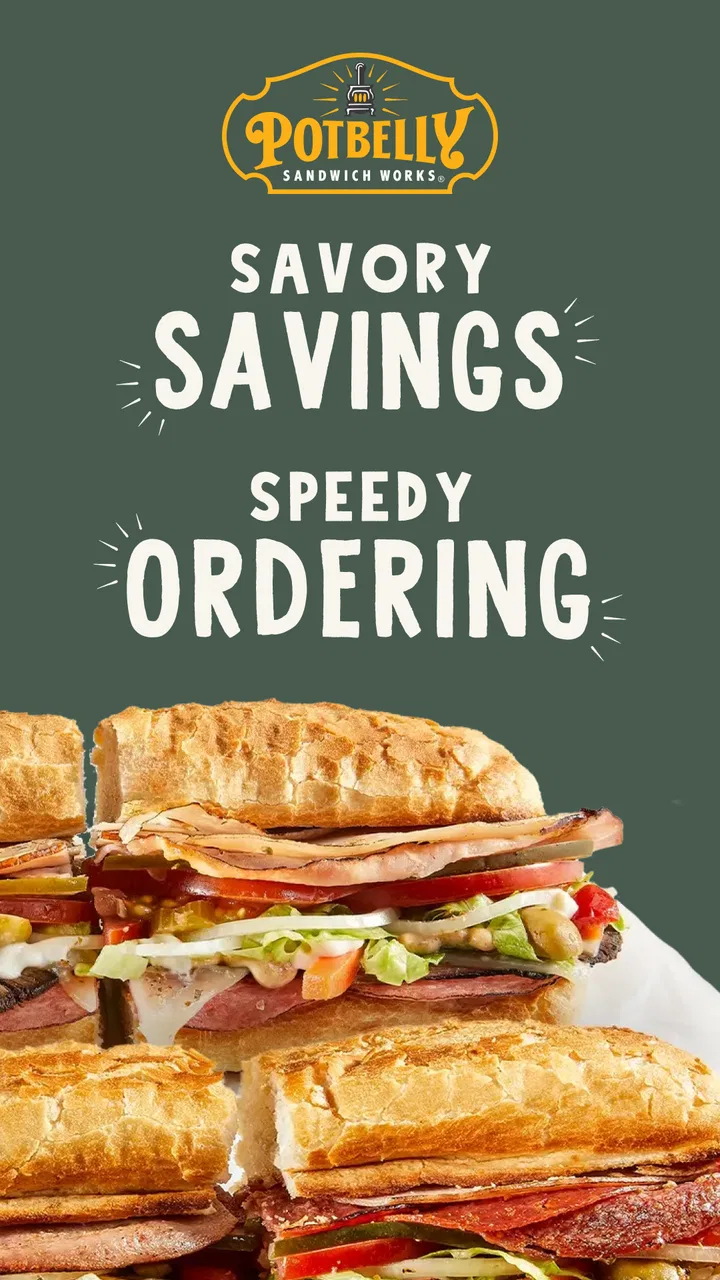
Potbelly Sandwich Works
- 4.6
- Rating
- 500.00K
- Installs
- Free
- Price

 Analysis by App-foxy
I use food-ordering apps for one simple reason: I want to decide what I am eating before I reach the counter, without turning a quick lunch into a long conversation about every choice. Potbelly Sandwich Works is built around that exact moment. It is a free Food & Drink app from Potbelly Sandwich Works that lets me arrange a sandwich order for pickup or delivery while keeping rewards in the same place. After spending time with it, I see it less as a broad restaurant marketplace and more as a direct ordering tool for people who already like Potbelly and want a smoother way to return.
The most important capability is the connection between ordering ahead and earning rewards. That pairing changes the app from a digital menu into a repeat-visit tool. I can look through the available food, make choices before arriving, select the ordering route that suits the occasion, and keep the loyalty side of the visit tied to the same account experience. It is a focused idea, but it matters when I am ordering the same kind of meal during a busy workday.
The app has built a solid audience: it has passed half a million installs and holds a 4.7 average from roughly thirty-five thousand ratings. Those figures do not automatically make every order perfect, but they suggest that the basic workflow works well for many regular customers. I also appreciate that it is free and rated for Everyone, so the barrier to trying it is low. The current version is 8.8.0, and it supports devices running Android 8.0 or later.
You May Also Like

 Blood Strike: 2.5 Anniversary
Blood Strike’s Loadouts Turn Every Drop Into a Tactical Gamble
A close look at Blood Strike’s custom loadouts: how fast access to signature weapons reshapes its battle royale rhythm, rewards preparation, and narrows the gap between fights.

 Pandora - Music & Podcasts
Pandora’s Music Is Easy to Start, but Harder to Recover
Pandora’s strength is its low-effort path from a seed to a station. Its weak spot is how much confidence it asks you to place in connection, setup, and quiet recovery.

 8 Ball Pool
 Is Built on Rivalries, Rematches, and Routine
A close look at the rivalries, rematches, shared routines, and unanswered safety questions that turn a quick pool match into a persistent mobile community.

 Samsung Music
’s Quiet Strength Is Playing What You Already Own
Its reach comes less from spectacle than from dependable access to a personal library. That simplicity is both the app’s strongest retention engine and its ceiling.

 AccuWeather: Weather Radar
AccuWeather Review: A Quick, Clear Forecast for Everyday Decisions
For everyday plans, the best forecast is the one you can understand quickly. AccuWeather makes rain timing, radar, and local conditions easy to act on, with a few trade-offs.

 Hill Climb Racing
Why Hill Climb Racing Still Turns Crashes Into One More Run
A tiny car, a bumpy hill and one more upgrade: Hill Climb Racing keeps resurfacing because its simple chaos makes every near-miss feel personal.
More From Our News Desk
View All News


Ordering ahead is the feature that matters most
I find that the app’s main convenience depends on being connected at the moments when I choose items and submit an order, so I treat a stable connection as part of planning lunch rather than something to test at the last second. That makes it worth thinking about where I will be when I place the order, especially before moving between meetings or heading out. The next section looks at how that workflow fits into everyday mobile situations.
Why the combined workflow is useful
In my experience, the real benefit is not simply seeing sandwiches on a phone. I can already read a menu in a restaurant or use a general delivery service. The useful part is being able to make the order before I am standing in line, then use the same app as the home for the rewards experience. That creates a more deliberate visit: I can choose while I have a spare minute, check my selections, and arrive with the meal decision already handled.
This is especially helpful when I am ordering for a predictable routine. If I am leaving work for a short lunch break, I do not want to spend that break browsing, waiting, and then trying to remember whether I wanted to change an ingredient. Ordering in advance lets me separate the planning from the pickup. The app is at its best when the food choice is familiar and the timing matters more than discovery.
There is also a practical distinction between using a restaurant’s own app and using a general delivery marketplace. A marketplace is convenient when I am comparing several restaurants, but it can add another layer between me and the restaurant. Potbelly’s app keeps the experience centered on Potbelly’s own menu and ordering relationship. That narrower focus is a strength for loyal customers, although it is not as useful if I am still deciding among many different restaurants.
What I pay attention to before sending an order
I treat the ordering screen as a planning tool rather than a place to rush through taps. I first decide whether I need pickup or delivery, because that choice changes the entire purpose of the order. Pickup makes sense when I am already going near a Potbelly location and want to reduce waiting. Delivery is more suitable when convenience matters more than making the trip myself. Choosing the route early helps me avoid building an order around a timing assumption that does not fit the day.
Next, I review the sandwich choices and any additional food I want before I focus on rewards. This sounds obvious, but it prevents a common mistake with loyalty-driven ordering: selecting something merely because I am thinking about earning a benefit. I get more value from the app when I use rewards as a reason to return, not as a reason to order food I did not actually want.
A useful habit is to pause before the final confirmation and check the order as if I were reading it aloud to someone else. I look for the selected items, the pickup or delivery choice, and any customization I made. That short review is more important in an app than at a counter because a mistaken digital order can be less obvious until I arrive or the delivery is already underway.
A realistic weekday example
Imagine I have a short lunch window on a day packed with meetings. In the morning, I open the app and choose a Potbelly location that fits my route. I decide on pickup rather than delivery because I will already be nearby. I build the order while I have time to think, check the details, and submit it before the meeting begins. When lunch arrives, the app has already done the part I needed most: it moved the decision and most of the waiting out of the limited break.
That scenario shows why the app can be more valuable than its feature list suggests. It is not saving me from a complicated cooking task. It is reducing small points of friction at a predictable moment. The reward element gives me another reason to keep using the same ordering channel instead of starting from scratch each time.
Where rewards fit into the routine
The rewards function makes the most sense for someone who visits Potbelly repeatedly. I would not install the app solely for a single occasional order unless I already expected to return. Once it is part of my routine, however, the loyalty connection becomes a quiet advantage: I can order in the same place and keep the visit connected to the rewards process instead of treating every purchase as an isolated transaction.
I recommend checking the reward status during a natural pause, such as before building the next order, rather than making it the first thing I think about. That keeps the app useful even when a reward is not immediately available. It also makes it easier to judge whether the loyalty program genuinely fits my habits. If I rarely eat at Potbelly, the ordering convenience may still help, but the rewards side will have less influence.
The important trade-off is that loyalty can encourage concentration. If I already want a Potbelly sandwich, the app gives me a sensible reason to order directly. If another restaurant is closer, cheaper, or better suited to the occasion, I should not let the existence of a reward force the wrong choice. A good loyalty feature should support a habit, not dictate every meal.
Pickup, delivery, and the question of control
Pickup is the mode where I feel the app’s purpose most clearly. I can plan around a location and reduce the amount of time spent waiting in person. It works particularly well for solo lunches, planned takeout, and moments when I know roughly when I will be passing by. The app gives me more control over the preparation stage than simply walking in and hoping the line is short.
Delivery offers a different kind of convenience. It removes the trip, which is useful when I am at home, working, or ordering for someone who cannot easily go out. The compromise is that delivery depends more heavily on timing outside my direct control. Traffic, driver availability, and the distance to the destination can affect the experience. I see the app as a way to place the order conveniently, not as a guarantee that every delivery will feel as immediate as pickup.
For a group order, I would be more careful. A direct restaurant app can be efficient when one person knows what everyone wants, but a group with many changes may find a shared chat or a general ordering service easier for collecting preferences. Potbelly’s app is strongest when the person placing the order has a clear plan. It is less naturally suited to turning a large, indecisive group into an orderly transaction.
Small habits that make the app easier to use
I decide pickup or delivery before choosing food, because the ordering context affects how I judge convenience.
I review the complete order once before confirmation, especially when I have changed ingredients or am ordering for another person.
I use rewards as a bonus for a meal I already want, rather than allowing the reward to choose the meal for me.
I place pickup orders with a realistic buffer instead of scheduling them around the last possible minute of a break.
These are not flashy tricks, but they address the areas where a direct ordering app can disappoint: choosing the wrong fulfillment method, overlooking a customization, or creating unnecessary pressure around timing. The app handles the digital part well when I give it a clear plan.
What the app does better than the usual alternatives
Compared with ordering at the counter, the app gives me more time to think and less time standing in a queue. That matters when I am ordering between commitments or when I prefer not to make decisions while people are waiting behind me. It also keeps my Potbelly visits in one place, which makes the rewards connection more natural than using a different service for every order.
Compared with a general delivery marketplace, the app feels more focused. I am not searching through unrelated restaurants, sponsored listings, or a wide range of cuisines. That can be a disadvantage if I want maximum choice, but it is an advantage when I have already decided on Potbelly. The narrower catalog removes comparison clutter and lets me get to the restaurant’s own ordering flow.
Compared with calling the restaurant, the app is easier for reviewing a written order. A phone call can be quick for a simple request, but it is less convenient when I need to remember several items or explain preferences carefully. The app gives me a visible record of what I selected before I submit it. For me, that makes digital ordering less stressful than trying to communicate a detailed meal verbally.
Where the experience can feel limited
The same focus that makes the app straightforward also limits its usefulness. It is not the right tool for comparing every nearby restaurant, finding the widest possible menu, or managing a broad food budget across several services. If I am undecided about what cuisine I want, I would start with a marketplace or map-based search instead. Potbelly’s app becomes valuable after I have already narrowed the decision to Potbelly.
Timing also deserves realistic expectations. Ordering ahead can reduce counter waiting, but it cannot remove every variable from a busy restaurant or delivery route. I would not use it to create an impossibly tight schedule, especially when I need the food at an exact minute. Pickup gives me more control than delivery, but even pickup works best when I allow a little flexibility.
There is a mental cost to maintaining another restaurant account and another rewards relationship. For frequent Potbelly customers, that cost is small because the app serves a repeated purpose. For occasional visitors, installing an app, signing in, and remembering to use it may feel like more effort than simply ordering once. The free price removes the financial barrier, but it does not remove the attention required to make a loyalty app worthwhile.
I also would not recommend relying on any restaurant app without checking the final order details. Digital menus make customization convenient, but convenience can encourage fast confirmation. If I am ordering for someone with a specific preference or dietary concern, I take extra care to read the selections and confirm that the order reflects what I intended. The app can organize my choices, but I remain responsible for reviewing them.
Who gets the most value
The best match is a regular Potbelly customer who alternates between pickup and delivery and wants rewards attached to the same routine. Office workers, commuters, students near a participating location, and households that order the restaurant repeatedly can all benefit from having the process ready on their phones. The app is especially practical for people who prefer to plan lunch before the rush rather than decide at the counter.
It is also a sensible choice for someone who dislikes phone calls. The written ordering flow gives me a clearer way to build a sandwich order, inspect it, and send it without explaining every detail aloud. That is a modest advantage, but it becomes meaningful when I am placing an order from a noisy workplace, during a commute stop, or while coordinating food for someone else.
I would skip it if I almost never eat at Potbelly, if I mainly want to compare multiple restaurants, or if I prefer spontaneous counter ordering. I would also choose a broader delivery service when the main goal is to combine food from different restaurants or compare delivery options in one place. This app is not trying to solve those problems, and I do not think it should be judged as though it were built for them.
Device support and everyday accessibility
The app is available at no charge and is suitable for Everyone, which makes it approachable for a wide range of users. Its Android requirement reaches back to version 8.0, so people with older but still functional phones may be able to use it without replacing their device. That is helpful for a simple food-ordering task, where I do not expect to need a high-end phone.
Potbelly Sandwich Works released the app on March 3, 2014, and the current version is 8.8.0. I mention that because the product feels like an established ordering channel rather than a brand-new experiment. The developer’s identity is clear, and the app’s purpose stays closely tied to the restaurant instead of expanding into unrelated features.
My final view is straightforward: I recommend Potbelly Sandwich Works to people who already enjoy Potbelly and want a practical way to order ahead while keeping rewards connected to their visits. Its strongest effect is not novelty; it is the reduction of small, repeated hassles around lunch and takeout. I would use it for planned pickup, recurring orders, and occasions when I want to avoid waiting at the counter.
I would not install it just because every restaurant has an app. If Potbelly is only an occasional choice, the rewards may not justify the extra account and routine. But for a returning customer, the focused design is exactly the point. The best reason to use it is the complete repeat-order workflow: choose in advance, select the fulfillment method that fits the day, review the details, and keep the visit connected to rewards. That is a specific benefit, and in the right everyday situation, it is enough to make this free Food & Drink app worth keeping.
FAQs for Potbelly Sandwich Works
01What features does the Potbelly Sandwich Works app offer?
The Potbelly Sandwich Works app offers features such as online ordering, menu browsing, and location finding. Users can customize their orders, choose from a variety of sandwiches, soups, and salads, and even save their favorite orders for future convenience. Additionally, the app provides exclusive offers and rewards for loyal customers.
02Is the Potbelly Sandwich Works app available for both Android and iOS?
Yes, the Potbelly Sandwich Works app is available for both Android and iOS devices. You can download it from the Google Play Store or the Apple App Store, ensuring a seamless experience regardless of your device. This compatibility allows users to enjoy all the app's features on their preferred platform.
03How does the rewards program work in the Potbelly Sandwich Works app?
The rewards program in the Potbelly Sandwich Works app lets users earn points for every purchase. These points can be redeemed for discounts or free items on future orders. By regularly using the app, customers can accumulate points quickly and enjoy exclusive rewards tailored to their preferences.
04Can I customize my order through the Potbelly Sandwich Works app?
Absolutely! The Potbelly Sandwich Works app allows users to fully customize their orders. You can choose from a variety of bread, toppings, and dressings to create your perfect sandwich. This feature ensures that every order is made to your liking, providing a personalized dining experience.
05Are there any special promotions or discounts available through the app?
Yes, the Potbelly Sandwich Works app frequently offers special promotions and discounts. Users can receive app-exclusive deals, notifications about limited-time offers, and early access to new menu items. These promotions provide added value and encourage customers to use the app for all their Potbelly orders.
Pros
- User-friendly interface for quick ordering.
- Customization options for sandwiches and sides.
- Loyalty rewards program for frequent customers.
- Nutritional information available for health-conscious users.
- Fast and responsive app performance.
Cons
- Limited delivery areas may restrict use.
- Occasional app crashes reported by users.
- No option to save favorite orders for quick access.
- Lack of push notifications for order updates.
- In-app promotions are not always available.

Potbelly Sandwich Works
Gallery